When your DualSense stops vibrating, or the rumble goes weak or one-sided, it's worth knowing that the cause is usually a setting or a software state, not broken hardware. The DualSense's haptics come from two voice-coil actuators, one in each grip, and genuine actuator failures are less common than a disabled setting, an outdated firmware version, or a game that simply uses little vibration. Here are seven fixes, ordered so the free and likely ones come first, with the hardware repair last.
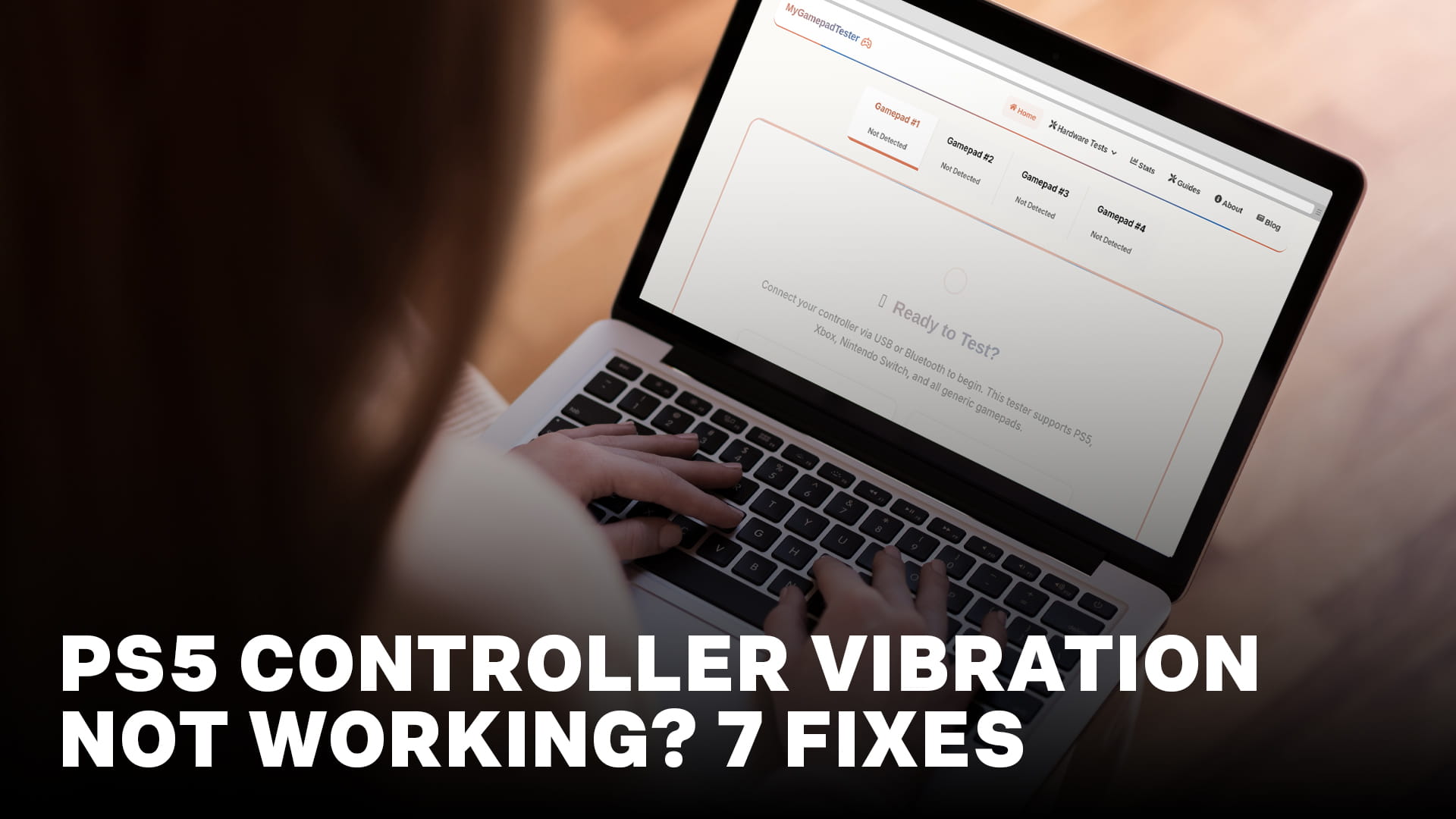
Before you start, it helps to know whether the problem is the controller or something upstream. The quickest check is a browser vibration test: connect the DualSense (USB-C is best), press a button to wake the gamepad interface, and trigger the test. If both grips buzz, your hardware is fine, and the problem is a setting or a specific game. If nothing happens, keep working down this list.
1. Check Vibration Intensity is on
This is the most common cause by far, and it takes ten seconds. On the PS5, go to Settings > Accessories > Controllers > Vibration Intensity and make sure it's set to Strong or Medium, not Off. If it was off, that fully explains missing vibration, and turning it on fixes it.
While you're there, note that many games also have their own vibration toggle in their controller or accessibility options. A single game feeling flat while others rumble normally usually means that game's setting is turned down, not a controller fault.
2. Test in a game that actually uses haptics
Games vary enormously in how much vibration they apply, so judging your controller by a light-rumble title will mislead you. The definitive test is Astro's Playroom, which ships free on every PS5 and was built as a haptics showcase. It exercises both actuators heavily and with variety.
If you feel rich, varied vibration in Astro's Playroom, your haptics are healthy and any "no vibration" you experienced elsewhere was that game's settings or design. If it's weak or absent even there, you've confirmed a real problem worth chasing with the fixes below.
3. Reset the controller
A hung software state can disable vibration, and a reset clears it. On the back of the DualSense near the Sony logo there's a small hole. Press the recessed button inside with a paperclip for about five seconds, then reconnect via USB and press the PS button. This is free, takes a minute, and resolves a fair share of sudden vibration losses, especially ones that appeared after the controller was used on another device.
4. Update the controller firmware
Outdated firmware can cause input and feedback bugs. On the PS5, go to Settings > Accessories > Controllers > Wireless Controller Device Software and install anything pending. Sony also offers a Windows firmware updater if you don't have console access. Like the reset, this won't fix a broken actuator, but it rules out a software cause and occasionally restores vibration that a bug had disabled.
5. Check your connection, especially on PC
If you're on PC, vibration problems are often connection-related rather than hardware. The DualSense shares haptic data over the connection, and Bluetooth bandwidth is often too tight to carry full-strength vibration, so some drivers throttle or drop rumble over wireless. Connect by USB-C and retest. If vibration returns when wired, your actuators are fine and the issue was the wireless link.
Also check Windows itself: under Settings, the gamepad or Bluetooth device settings can disable vibration globally, and Safari and older browsers don't support the vibration API at all, so a failed browser test might be the browser, not the controller. Use Chrome or Edge for testing.
6. Rule out a per-game or platform quirk
Before assuming hardware, confirm the pattern. Vibration that works in some games and not others is normal, since games choose their haptic levels. Vibration that works on PS5 but not PC (or vice versa) points to a platform or driver issue, not a dead motor. And vibration that's simply weaker than you remember might be Vibration Intensity set to Medium rather than Strong. Narrowing down when it fails tells you whether you're chasing a setting or a repair.
Why DualSense vibration fails in the first place
A little context helps you judge how worried to be. The DualSense's voice-coil actuators are more sophisticated than the old spinning-weight motors in older controllers, which is why PS5 haptics feel so detailed, but the tradeoff is more to potentially go wrong. That said, outright actuator death is not the most common outcome. Far more often, vibration "fails" because of a disabled setting, a firmware hiccup, a weak Bluetooth link starving the haptics of bandwidth, or simply a game that uses minimal rumble.
When actuators do fail, it's usually one of two ways: a loose or broken connection to the actuator (which can produce intermittent or one-sided vibration, sometimes with a rattle), or genuine wear after very heavy use. Drops are a common trigger for the loose-connection type, since the impact can dislodge the actuator or its wiring. This is why the diagnostic order matters so much: rushing to "the motor is broken" skips the far more likely settings and connection causes, and a controller sent for repair over a disabled setting comes back working but with an unnecessary bill or downtime.
Don't confuse it with the adaptive triggers
One clarification that saves people from chasing the wrong fix. The DualSense has two separate feedback systems that get lumped together: the haptic actuators in the grips (the vibration this guide covers) and the adaptive triggers in L2 and R2, which create variable resistance. They're independent, controlled by different settings, and can fail separately.
So decide which one you actually mean. Weak or absent rumble in the grips is a haptics problem, and the fixes above apply. But if L2 or R2 feels loose, notchy, or gives no resistance in a game that uses it, that's a trigger problem with its own setting (Trigger Effect Intensity) and its own repair path. A browser trigger test confirms the triggers move through their full range and return cleanly, which is a completely different check from the vibration test. Testing both when something feels off means you fix the right part instead of opening the controller for the wrong reason.
7. Repair or replace a failed actuator
If the vibration is dead or badly uneven across multiple games including Astro's Playroom, after a reset and firmware update, the actuator hardware is the likely culprit. A grip that stays completely silent while the other works points to a failed actuator or a loose connection on that side, and a rattle or buzz inside alongside weak rumble points the same way.
Cross-test on another PS5 if you can, since confirming the fault follows the controller rules out a console-side issue. If you're inside warranty (two years in the EU), contact PlayStation Support rather than opening the controller, since disassembly voids coverage. Out of warranty, the actuators are replaceable if you're comfortable with a teardown; our DualSense troubleshooting guide covers the internal access, which is the same disassembly whether you're after a motor, the battery, or the charge port.
One honest note before you go further: heavy haptics roughly halve the DualSense's battery life, so if your real goal is longer sessions rather than fixing a fault, turning Vibration Intensity down rather than off is a reasonable middle ground.
The short version
Check Vibration Intensity first, since a disabled setting is the most common cause. Confirm the hardware in Astro's Playroom or a browser vibration test. Reset and update firmware to clear software causes, and test wired on PC to rule out the connection. Variation between games is normal, not a fault. Only after all of that does a dead or one-sided actuator become the likely answer, at which point it's a warranty claim or a motor repair. If you also want to check the adaptive triggers while you're at it, note that those are a separate system with their own fixes.
Frequently Asked Questions
Q: Why did my PS5 controller vibration stop working?
Q: How do I know if my DualSense vibration motor is broken?
Q: Why does my DualSense vibrate on PS5 but not PC?
Q: Why is my DualSense vibration weak on one side?
Q: Does turning off vibration save PS5 controller battery?
Free Online Gamepad Tester
Test your controller for drift, deadzones, and input lag — no download required.
Launch Tester →